
Blog
Fresh coffee isn’t always best

Feb
Our Head of Quality Control and Sensory, Will Greavner, is back with more practical coffee knowledge. As the 2025 UK Cup Tasters Champion, Will combines technical expertise with a clear, approachable way of explaining coffee, helping demystify what can often feel like a complex subject. In this article, he explains why fresh coffee is not always at its best the moment it leaves the roaster.
The idea of freshly roasted coffee beans brings a smile to the face of most coffee drinkers, and is often a point of pride for the home brewer who is mindful of their morning cup. While it is true that coffee brewed close to its roast date is far more enjoyable than something that has sat on a supermarket shelf for 12 months, coffee can also be too fresh to taste its best.
Because roasting exposes coffee beans to intense heat, they require a period of rest before use. Understanding what happens to coffee during roasting helps explain why this resting phase is so important and how a little patience can lead to better-tasting coffee at home.
What happens during roasting
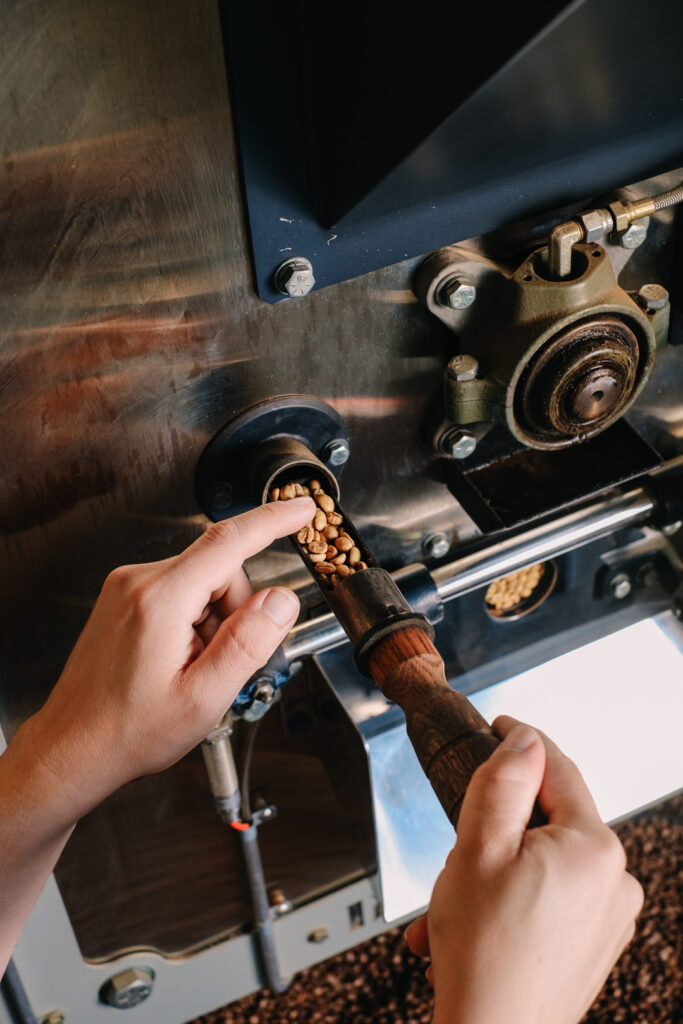
The first phase of the roast is drying, which begins at room temperature and ends at around 150°C. During this stage, the internal moisture of the beans is reduced through evaporation, dropping from roughly 10% to about 2%. This prepares the beans for the chemical reactions that follow.
Next comes the Maillard reaction, where amino acids react with reducing sugars to form complex polymers known as melanoidins. These compounds are responsible for many of the nutty, bready and savoury flavours we associate with coffee, as well as the characteristic brown colour of roasted beans. Melanoidins also play a key role in producing espresso crema and contribute to the body and mouthfeel of filter coffee.
At around 195°C, the roast reaches first crack. This is the audible popping sound caused by the rapid expansion of the beans as internal pressure increases. For darker roasts, a second crack may occur at temperatures closer to 225°C, though this stage is not relevant for most lighter or medium roast styles.
Following the first crack is the development, or caramelisation, phase. Unlike the Maillard reaction, caramelisation involves the breakdown of sugars without proteins present. This process creates aromatic compounds such as maltol, furan, diacetyl and lactones, which contribute sweet, toasty and caramel-like flavours to the finished coffee.
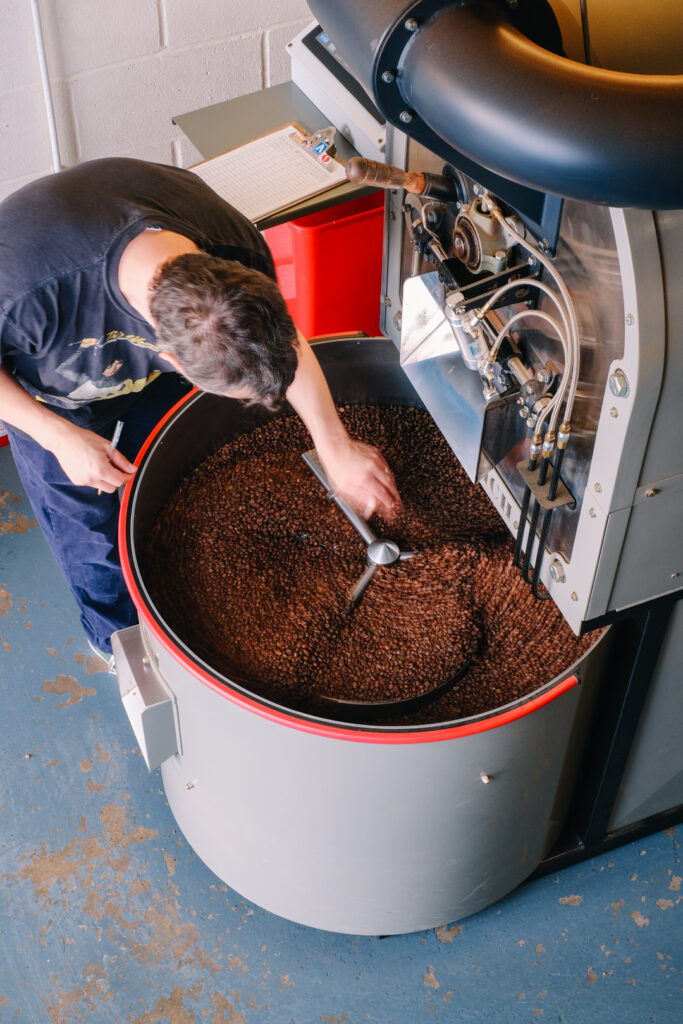
The final stage is cooling, which happens immediately once the target roast level has been reached. This step is crucial. The beans must be cooled rapidly to prevent over-development from residual heat. The coffee is dropped into a cooling tray where a fan and agitator work together to bring the temperature down quickly and evenly.
Resting coffee after the roast
Once roasted, coffee begins to release carbon dioxide. More than 40% of this gas escapes within the first 24 hours, with further release continuing over the following days. Brewing coffee that is too fresh means this excess CO₂ can interfere with extraction, creating small gas pockets in the coffee bed. This leads to uneven extraction and a cup that tastes unbalanced, sharp or hollow, with flavours that lack depth.
For best results, I recommend resting coffee up to 7 days before use. Depending on where and how you buy your coffee, it may already have rested for a few days by the time it reaches you. By this point, much of the excess CO₂ has dissipated, and the flavours have had time to settle and develop properly.
To see how resting affects flavour in real terms, we did an experiment with one of our latest releases: the Mexico Oaxaca Santa Maria Ozolotepec L3. A washed coffee with a thorough fermentation process to bring out the best characteristics.
| IMMEDIATELY AFTER ROASTING | The flavour is very nutty, woody and cereal-like (à la Weetos). It comes across very ‘weak’ and low impact. The body is very thin, and the acid is very low. The experience is very flat and linear. |
| 1 HOUR AFTER ROASTING | More flavoursome now, although slightly popcorn-like. More character and body, much sweeter with aspects of chocolate cake, hazelnut and apricot. The body is more substantial, and the mouthfeel is smooth. |
| 1 DAY AFTER ROASTING | Rounder, more complete experience. Good depth and detail in the flavours. |
| 3 DAYS AFTER ROASTING | The complete article. Great sweetness, complexity and balance. All flavours show amazing clarity and perceptibility. The stone fruits and banana are pronounced and inviting, also supported by a nutty praline and milk chocolate. |

Resting coffee is just one of the many small, mindful adjustments we can make to dramatically improve how our coffee tastes, without spending any extra money. Throughout the year, we will continue to explore these simple but impactful topics.